
4. Maritime Innovation and Naval Strategy
Home > Article Detail
Author: Shreyas Patil
Date: September 18, 2026
Introduction
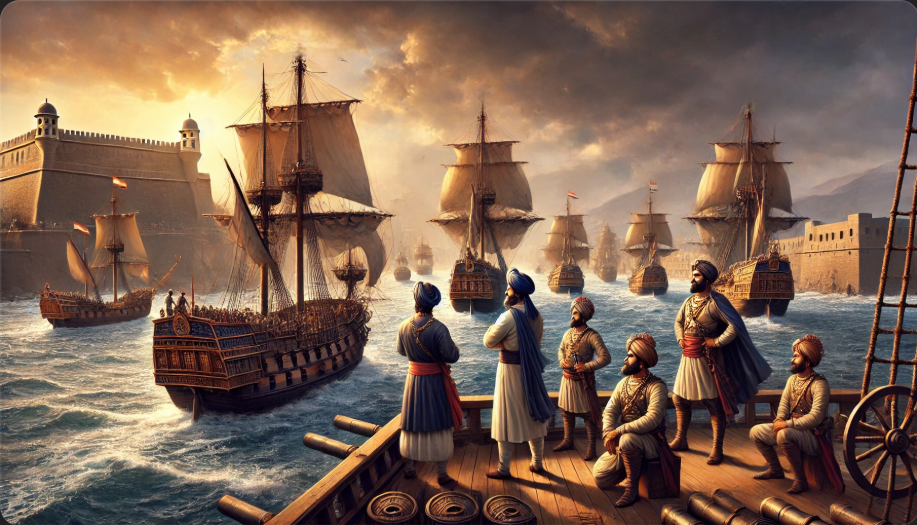
While Shivaji Maharaj is widely recognized for his achievements on land, his contributions to maritime defense and naval innovation often receive less attention. In a time when most Indian rulers focused solely on land-based strategies, Shivaji understood the strategic and economic importance of controlling coastal waters. He built one of India’s first organized navies and fortified coastal regions to protect trade routes and repel foreign powers like the Portuguese, Dutch, and British.
This chapter delves into Shivaji’s maritime vision, exploring his naval innovations, strategic fortifications, and the lasting impact of his efforts on maritime defense.
The Need for a Naval Force
The 17th century saw intense competition among European powers and local kingdoms for control of India’s lucrative trade routes. Shivaji recognized that to safeguard the Maratha Empire's economic interests and defend against coastal invasions, a strong navy was essential.
- Threats:
- Portuguese and British naval dominance threatened local trade and sovereignty.
- Pirates and foreign raiders disrupted maritime commerce.
- Opportunities:
- The Arabian Sea offered a gateway for trade, enabling economic prosperity.
- Controlling coastal waters would ensure safe passage for merchants and fishermen.
Formation of the Maratha Navy
Shivaji began building his navy in the 1650s, assembling a fleet of diverse ships designed for different purposes.
- Ship Types:
- Ghurab: Medium-sized warships used for combat and patrolling.
- Galbat: Lightweight and agile ships for reconnaissance and quick raids.
- Pal: Larger vessels for transporting supplies and troops.
- Recruitment and Training:
- Shivaji hired skilled sailors and shipbuilders from coastal communities like the Kolis, who had traditional expertise in navigation and fishing.
- He trained his forces to navigate shallow coastal waters and use innovative tactics, such as boarding enemy ships and conducting swift raids.
Naval Fortifications
Shivaji fortified coastal areas to complement his naval fleet. These forts served as command centers and provided secure harbors for ships.
- Sindhudurg Fort:
- Built on a rocky island off the Malvan coast, this fort was Shivaji’s naval headquarters.
- Features:
- Massive stone walls designed to withstand cannon fire.
- Hidden freshwater wells within the fort to sustain prolonged sieges.
- Concealed entry points to evade detection by enemies.
- Vijaydurg Fort:
- Positioned strategically to monitor sea traffic along the Konkan coast.
- Features:
- A natural harbor that could accommodate a fleet of warships.
- Underwater trenches to trap and damage enemy ships.
- Khanderi and Underi Forts:
- Twin forts located near Mumbai to guard maritime trade routes.
- Features:
- Advanced signaling systems to communicate with other forts and ships.
- Beacon towers to guide ships safely to shore.
Naval Tactics and Strategy
Shivaji’s naval strategy emphasized agility, surprise, and leveraging local knowledge of the terrain.
- Coastal Patrolling:
- Regular patrols ensured the security of trade routes and deterred pirate activity.
- Hit-and-Run Tactics:
- His navy conducted quick raids on enemy ports and ships, disrupting their supply chains.
- Guerrilla Warfare at Sea:
- Similar to his land-based tactics, Shivaji’s naval forces used speed and stealth to outmaneuver larger, slower enemy fleets.
Economic and Trade Implications
Shivaji’s maritime initiatives were not just defensive; they also aimed to boost the empire’s economy by promoting trade and protecting merchants.
- Encouragement of Local Trade:
- Shivaji’s navy safeguarded fishermen and local traders, ensuring their prosperity.
- Revenue from Maritime Taxes:
- The empire collected taxes from ships passing through its waters, generating significant income.
Challenges and Achievements
- Challenges:
- Competing with the technologically advanced fleets of the Portuguese, British, and Dutch.
- Limited resources and the need to train sailors and shipbuilders.
- Achievements:
- Successfully defended the Konkan coast against powerful adversaries.
- Established a model for organized naval defense in India.
Legacy of Shivaji’s Naval Strategy
Shivaji’s maritime innovations set a precedent for naval defense in India. His efforts inspired subsequent rulers, such as the Marathas under the Peshwas, to continue strengthening their naval forces. Modern India’s emphasis on coastal security owes much to Shivaji’s vision of a well-protected maritime frontier.
Key Takeaways
- Shivaji Maharaj was one of the first Indian rulers to recognize the importance of a strong navy.
- His naval innovations combined advanced engineering with strategic foresight.
- Shivaji’s maritime efforts contributed significantly to the security and prosperity of the Maratha Empire.
Activity Corner
- Map Exercise:
- Mark Shivaji’s key coastal forts on a map of the Konkan coast.
- Research Task:
- Investigate how modern Indian naval bases reflect Shivaji’s principles of coastal defense.
- Debate:
- "Shivaji’s naval strategy: A precursor to modern maritime security?"
Conclusion
This chapter highlights Shivaji Maharaj’s foresight in building a naval force, emphasizing his contributions to maritime defense, trade, and economic growth. It encourages students to explore the relevance of his innovations in today’s context.